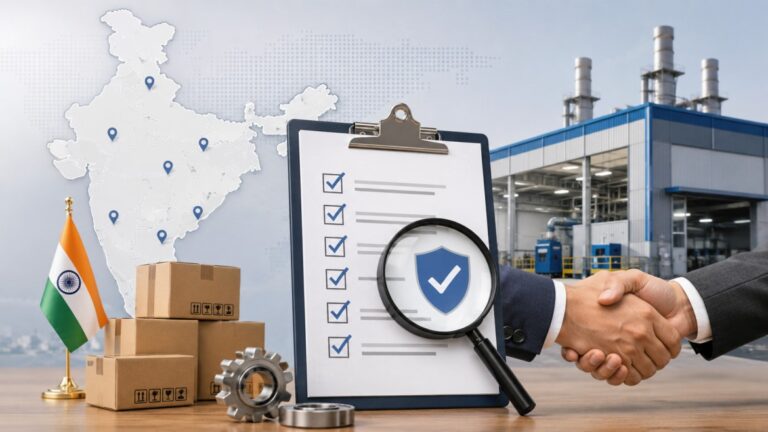
Regulatory changes in India 2026 are shaping the way companies operate, invest, import, export, and expand across sectors. India is entering a new growth phase with stronger digital systems, simplified compliance structures, infrastructure development, and policy reforms focused on manufacturing, global trade, startups, and foreign investment.
For businesses operating in India or planning market entry, understanding these changes has become essential. Moreover, companies that adapt early can reduce compliance risks, improve operational efficiency, and gain long-term advantages in a competitive market.
At Savi Enterprises, businesses receive practical consulting support for company setup, licensing, regulatory changes in India 2026, market research, and strategic business expansion in India. (–)
India’s Business Environment Is Becoming More Structured
India continues to position itself as a global manufacturing and investment destination. Therefore, the government is introducing policies that support transparency, digital governance, and ease of doing business.
Several India compliance updates 2026 are focused on reducing manual procedures and improving digital reporting systems. As a result, businesses are expected to maintain stronger documentation, faster reporting, and improved tax transparency.
Meanwhile, sectors such as electronics, food processing, cosmetics, healthcare, logistics, renewable energy, and e-commerce are seeing major policy attention. These developments are creating new opportunities for domestic and international investors.
Internal Link Opportunity
Businesses planning market entry can explore professional support through Business Setup Services in India for company registration, licensing, and operational guidance.
GST and Digital Tax Compliance Are Becoming More Advanced
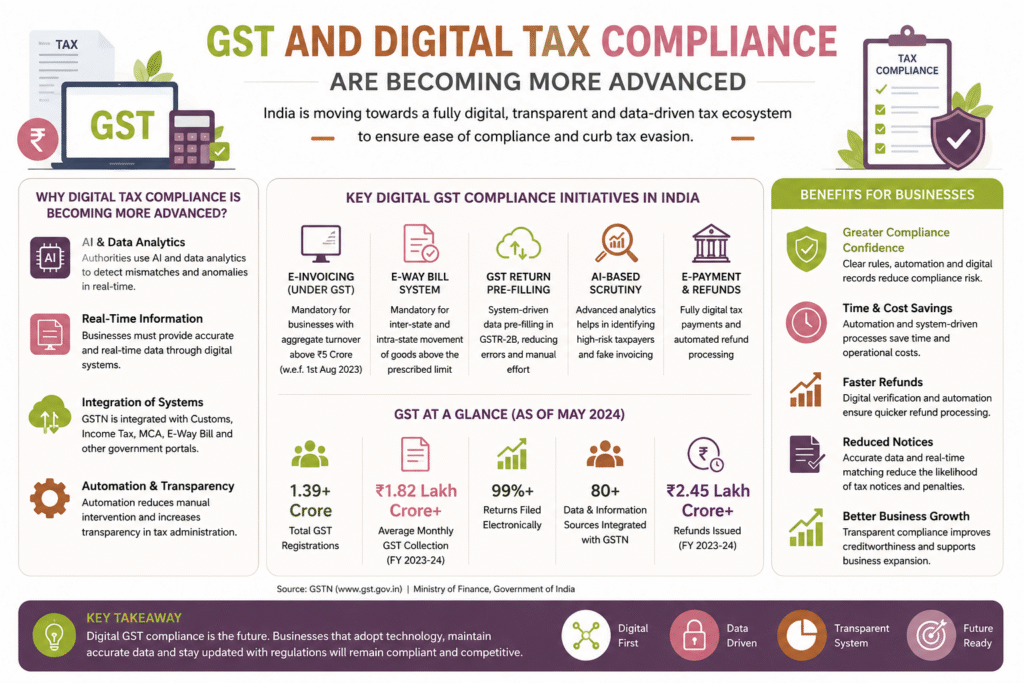
One of the biggest legal and regulatory changes in India 2026 is related to GST monitoring and digital taxation systems. Authorities are increasingly using AI-driven compliance checks to identify irregularities in filings and invoices.
Additionally, businesses are expected to maintain accurate vendor documentation and digital accounting records. Companies that rely on outdated systems may face delays, notices, or penalties.
Furthermore, the government is encouraging real-time invoice validation and stronger e-invoicing adoption across industries. This move is improving transparency while also reducing tax fraud.
These latest regulatory changes in India for businesses in 2026 are especially important for SMEs, importers, exporters, and manufacturing companies that deal with multiple vendors and interstate transactions.
Internal Link Opportunity
Companies seeking support for GST filing and financial compliance can review Accounting and Tax Advisory Services by Savi Enterprises for business assistance and compliance management. (–)
Import and Export Regulations Are Evolving Rapidly
India’s trade ecosystem is becoming more quality-focused and globally aligned. Therefore, importers and exporters must pay close attention to product standards, documentation, labeling, and certification rules.
Several Indian government policy reforms 2026 are encouraging local manufacturing while improving trade partnerships with international markets. As a result, businesses importing machinery, electronics, cosmetics, food products, and industrial materials may experience updated compliance procedures.
Additionally, BIS certifications, FSSAI approvals, CDSCO registrations, and customs regulations are becoming stricter in certain industries. Businesses that fail to meet updated standards may face shipment delays or additional inspections.
These new government compliance and regulatory updates in India 2026 are also increasing the demand for professional consulting support.
Internal Link Opportunity
For import-export consulting and regulatory changes in India 2026, businesses can explore Savi Enterprises Business Consulting Services for strategic guidance and market entry support. (–)
Startup Policies and MSME Support Continue to Expand
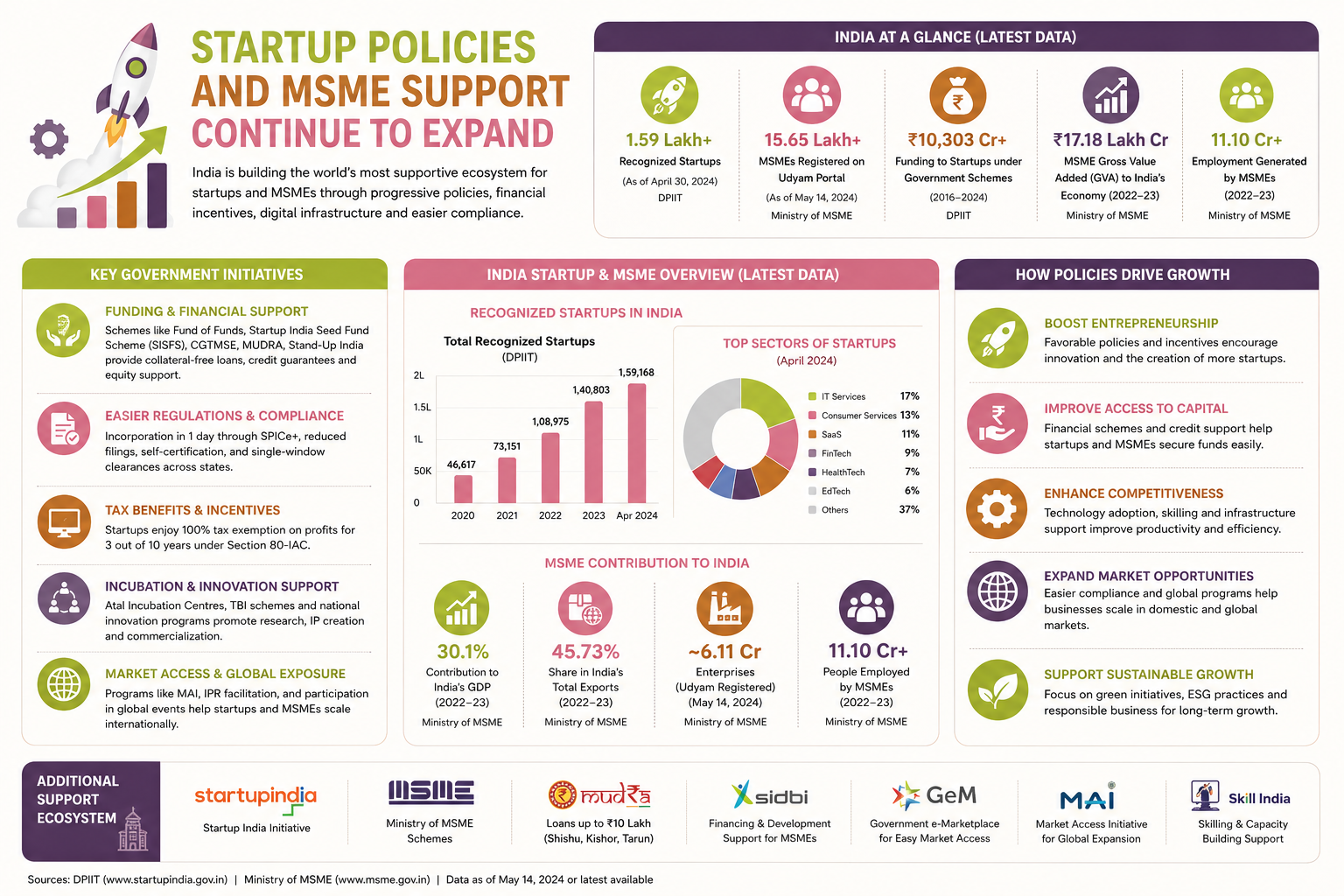
India is strongly supporting entrepreneurship and small businesses through financial incentives, digital infrastructure, and easier registration systems.
Many business regulations in India 2026 are now designed to simplify operations for startups and MSMEs. For example, faster company registration, online approvals, and digital compliance systems are helping businesses reduce operational delays.
Moreover, government-backed programs are encouraging manufacturing, exports, renewable energy adoption, and technology innovation. This is especially beneficial for startups entering sectors like food processing, artificial intelligence, logistics, fintech, and sustainable manufacturing.
At the same time, investors are showing stronger confidence in India because of regulatory stability and infrastructure development.
Internal Link Opportunity
Entrepreneurs interested in market expansion strategies can review Market Research and Business Consulting Services for industry insights and business planning support. (–)
Labour Laws and HR Compliance Are Becoming Digitized
The modernization of labor compliance is another major area of focus. Several India compliance updates 2026 are connected to employee documentation, payroll systems, workplace safety, and social security integration.
Businesses are increasingly expected to maintain digital employee records and transparent payroll structures. Meanwhile, hybrid work models and contractual employment systems are also influencing compliance frameworks.
Additionally, HR audits and employee welfare standards are receiving greater attention from authorities. Therefore, businesses must ensure that contracts, salary records, PF contributions, and workplace policies remain compliant.
These changes are particularly important for foreign companies establishing operations in India.
Internal Link Opportunity
Companies requiring operational and HR support can explore Business Setup and Administrative Services for local management assistance. (–)
Sustainability and Green Compliance Are Influencing Industries
Environmental responsibility is now becoming a business requirement rather than just a branding strategy. Several recent legal and regulatory changes in India 2026 has introduced are linked to sustainability reporting, waste management, renewable energy usage, and carbon reduction goals.
Manufacturing companies, exporters, and industrial businesses are especially affected by these developments. Furthermore, international buyers are increasingly preferring suppliers that follow sustainable practices.
The Indian government is also supporting clean energy projects, electric mobility, and environmentally responsible manufacturing through incentives and infrastructure investment.
As a result, businesses that invest early in sustainable systems may gain stronger market credibility and future growth opportunities.
External Link Opportunity
Businesses can also follow policy updates through the Invest India Official Portal, which provides information on investment opportunities, industrial reforms, and business policies in India.
Data Protection and Cybersecurity Regulations Are Expanding
Digital business growth has increased the importance of cybersecurity and data protection compliance. Therefore, companies handling customer information, payment systems, or online platforms must improve data security practices.
Several Indian government policy reforms 2026 are connected to digital privacy, cloud infrastructure, fintech regulations, and cybersecurity frameworks.
Moreover, businesses are now expected to implement stronger security measures, transparent data collection systems, and proper customer consent processes. Failure to comply can damage both brand reputation and customer trust.
These latest regulatory changes in India for businesses in 2026 are particularly important for IT companies, e-commerce brands, fintech firms, and online service providers.
Internal Link Opportunity
Technology-focused businesses can explore Business Consultancy and Strategic Support Services for operational guidance and expansion planning. (–)
Infrastructure Growth Is Improving Business Opportunities
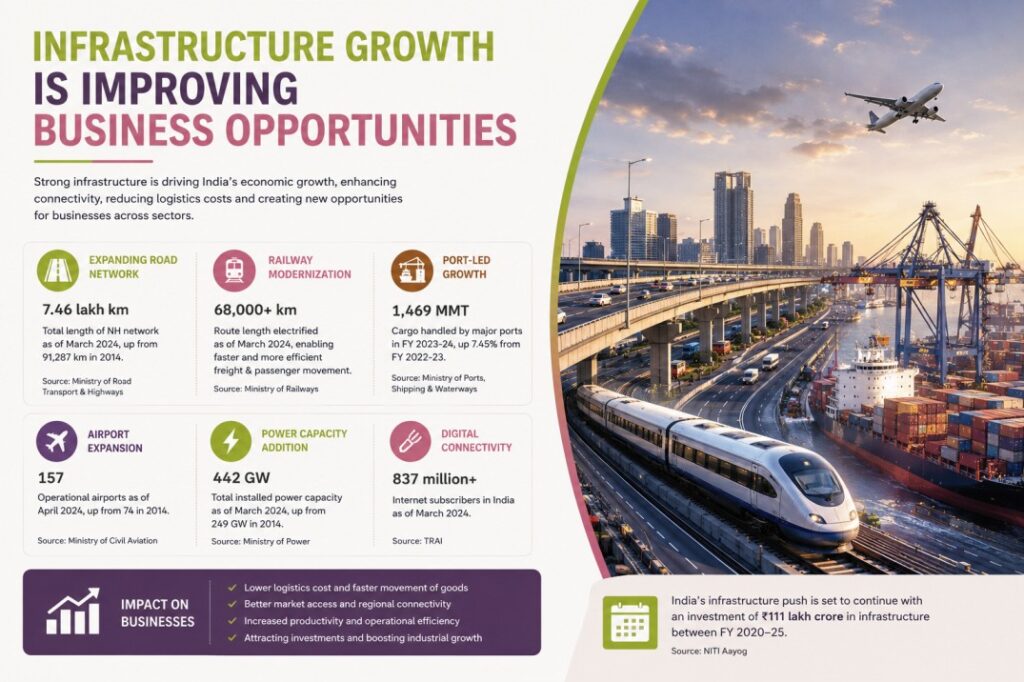
India’s infrastructure expansion is directly influencing industrial growth and investment opportunities. Large-scale developments in highways, logistics parks, ports, metro networks, and industrial corridors are reducing operational barriers for businesses.
Consequently, supply chain efficiency is improving across many sectors. Additionally, new industrial zones are attracting foreign companies looking for manufacturing and distribution advantages.
These new government compliance and regulatory updates in India 2026 are helping India strengthen its position as a global supply chain destination.
At the same time, easier connectivity is supporting the rapid growth of tier-2 and tier-3 business markets.
Internal Link Opportunity
International companies entering India can learn more through Savi Enterprises India Market Entry Consulting for practical support and local business guidance. (–)
Political Stability and Economic Reforms Are Supporting Growth
India’s long-term economic strategy is focused on manufacturing expansion, digital transformation, foreign investment, and infrastructure modernization. Therefore, businesses are benefiting from a more predictable and growth-oriented environment.
Many business regulations in India 2026 are being introduced with the objective of simplifying investment procedures and improving global competitiveness.
Additionally, production-linked incentive schemes, export-focused initiatives, and startup incentives are encouraging companies to scale operations within India.
Meanwhile, stronger diplomatic trade relations are opening new international opportunities for Indian businesses and foreign investors alike.
Why Businesses Need Strategic Consulting in 2026
The pace of regulatory changes in India 2026 is increasing. Therefore, businesses that depend only on traditional operational methods may struggle to keep up with evolving requirements.
Professional consulting support helps businesses understand licensing requirements, tax systems, market entry procedures, operational risks, and compliance frameworks more effectively.
At the Savi Enterprises Official Website, companies receive end-to-end support for company formation, market research, regulatory consulting, buyer matchmaking, accounting, and business expansion services in India. (–)
With deep knowledge of Indian markets and regulatory systems, Savi Enterprises helps businesses reduce operational complexity while focusing on sustainable growth.
Conclusion
Regulatory changes in India 2026 are creating both challenges and opportunities for businesses. However, companies that stay informed and proactive can benefit from stronger market access, improved transparency, and faster business growth.
From taxation and trade policies to sustainability, labor compliance, and digital governance, the current reforms are reshaping how businesses operate across industries.
Understanding these regulatory changes in India 2026 is no longer optional for serious businesses. Instead, it is becoming a key part of long-term business planning and competitive success.
As India continues its journey toward becoming a global business and manufacturing hub, companies that adapt early, invest strategically, and follow compliance frameworks carefully will be in the strongest position to grow confidently in the years ahead.