Introduction
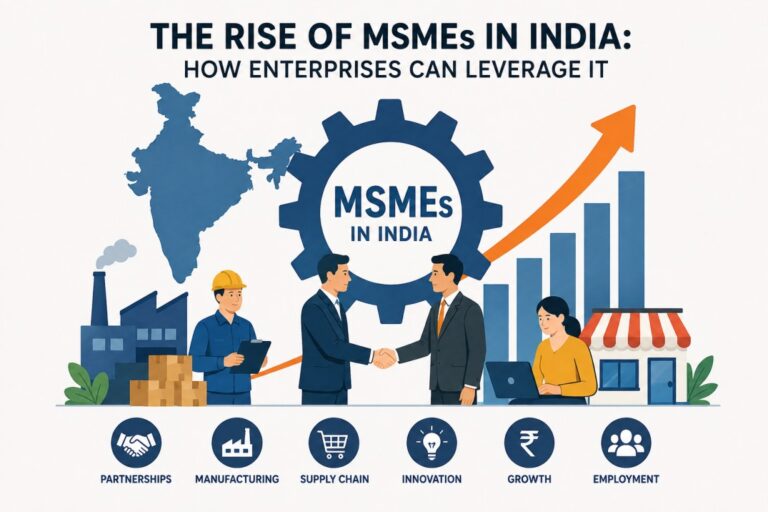
Reliable suppliers and manufacturers in India can help businesses reduce sourcing costs, improve product availability, build stronger supply chains, and enter the Indian market with more confidence. India has a large supplier and manufacturing base across industries such as food products, textiles, packaging, machinery, electronics, cosmetics, industrial goods, agriculture products, leather, handicrafts, chemicals, and consumer products.
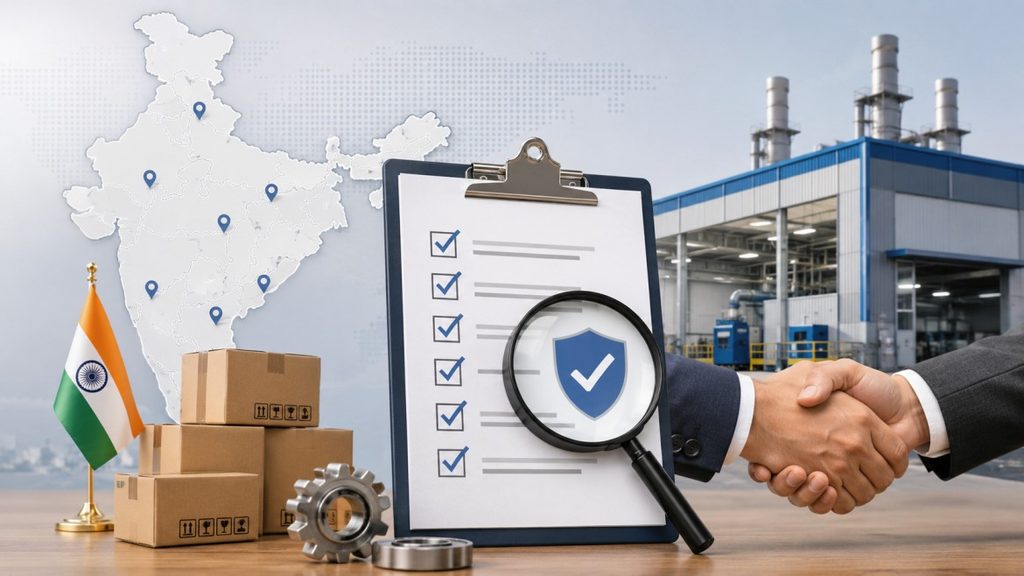
However, finding a supplier is not the same as finding the right supplier. Many companies make the mistake of selecting vendors only through online directories, low quotations, or attractive catalogues. A supplier may look professional online, but businesses should still verify legal identity, GST registration, production capacity, product quality, certifications, export experience, payment terms, and delivery reliability before placing an order.
This guide explains how to find reliable suppliers and manufacturers in India, what documents to check, how to verify factory capability, what red flags to avoid, and how Savi Enterprises can help with supplier search, manufacturer validation, sample coordination, negotiation support, and shipment documentation.
For professional support, explore Savi Enterprises Supplier and Manufacturer Support in India. Savi’s supplier and manufacturer service focuses on sourcing, identifying, listing, and validating suppliers for import and procurement needs.
Why Supplier Verification Is Important Before Placing an Order
When a business sources products from India, the supplier becomes a key part of its supply chain. A reliable supplier can maintain product quality, follow timelines, communicate clearly, and support repeat orders. An unreliable supplier can create problems such as delayed shipments, poor quality, wrong product specifications, hidden costs, weak packaging, payment disputes, or compliance issues.
Proper supplier verification helps businesses:
- Reduce sourcing risk
- Confirm legal business identity
- Check real manufacturing or trading capacity
- Avoid fake suppliers or inactive companies
- Understand pricing and payment terms clearly
- Validate product quality before bulk orders
- Check regulatory and certification requirements
- Build long-term sourcing relationships
For foreign companies and importers, supplier verification is even more important because distance, language, business culture, product standards, and logistics can create additional risks.
Step 1: Define Your Supplier Requirement Clearly
Before searching for reliable suppliers and manufacturers in India, create a clear sourcing requirement. Many sourcing problems begin because the buyer does not define product details properly.
Prepare these details before contacting suppliers and manufacturers in India:
| Requirement Area | Details to Prepare |
|---|---|
| Product Type | Product name, category, size, material, design, model or variant |
| Quantity | Sample quantity, first order quantity, monthly or yearly requirement |
| Quality Standard | Grade, certification, testing requirement, tolerance level |
| Packaging | Inner packing, carton details, labelling, branding, barcode |
| Delivery Terms | Required timeline, delivery location, export port, Incoterms |
| Price Target | Expected price range, payment terms, currency |
| Supplier Type | Manufacturer, wholesaler, exporter, OEM, private label supplier |
| Compliance | BIS, FSSAI, CDSCO, IEC, GST, trademark, labelling or other licenses |
A clear requirement helps filter suppliers and manufacturers in India faster and avoids unnecessary communication with unsuitable vendors.
Step 2: Shortlist Suppliers from Multiple Sources
Do not depend on only one source. To find reliable suppliers and manufacturers in India, businesses should create a wider list and then filter it step by step.
Supplier sources may include:
- Industry exhibitions and trade fairs
- B2B business directories
- Government and industry databases
- Export promotion councils
- Local market visits
- Business chambers and associations
- References from existing buyers
- Direct factory research
- Professional sourcing support
Savi Enterprises can help businesses with supplier mapping, market study, supplier list preparation, contact coordination, and validation through its Supplier and Manufacturer Support in India. Savi’s process includes studying the client and market, contacting suppliers, requesting catalogues and price lists, coordinating samples, conducting background checks, and supporting follow-up after orders.
Step 3: Verify Legal Identity and Company Registration
The first verification step is to confirm whether the supplier is a legally existing business. Ask for basic company documents before discussing serious orders.
Documents to request:
- Company registration certificate
- GST registration certificate
- PAN details
- Udyam registration, if MSME
- Import Export Code, if export/import is involved
- Factory license, if applicable
- Business address proof
- Owner/director details
- Bank account name matching business name
For companies and LLPs, you can check basic company information through the official MCA Company Master Details portal. MCA’s Corporate Data Management Portal provides company and LLP master detail access.
If the supplier claims to be a manufacturer but the documents show only trading activity, ask additional questions and request factory proof.
Step 4: Check GST Details and Business Status
GST verification is important because it helps confirm the legal name, trade name, registration status, business constitution, principal place of business, and return-related details.
The official GST taxpayer search allows users to view the profile of a registered taxpayer by entering GSTIN/UIN. It can show details such as legal name, trade name, registration date, business constitution, principal place of business, cancellation date if applicable, and return filing details.
Before placing an order, check:
- GSTIN validity
- Legal name and trade name
- State of registration
- Principal place of business
- Nature of business activity
- Return filing status, where visible
- Whether GST name matches invoice and bank details
GST mismatch does not always mean fraud, but it should be clarified before making payment.
Step 5: Verify Manufacturing Capacity
Many companies call themselves suppliers and manufacturers in India, but some may only be traders, agents, or resellers. Traders are not always bad, but buyers should know who they are dealing with.
To verify manufacturing capacity, ask for:
| Verification Point | What to Check |
|---|---|
| Factory Address | Actual production location |
| Machinery List | Machines used for production |
| Production Capacity | Daily, monthly or yearly output |
| Workforce Strength | Number of workers and supervisors |
| Quality Control Setup | Testing, inspection, rejection process |
| Raw Material Sources | Local or imported raw material |
| Previous Orders | Past production experience |
| Factory Photos/Videos | Current facility proof |
| Factory Visit | Physical or video inspection |
For higher-value orders, a physical factory visit or third-party inspection is strongly recommended. Savi Enterprises can support with supplier location validation, production facility inspection, communication, meetings, and onsite checking through its supplier validation process.
Step 6: Review Product Quality and Samples
Never place a bulk order only on the basis of catalogues and photos. Product samples are essential for quality verification.
Check sample quality for:
- Material quality
- Size and specifications
- Finishing
- Durability
- Packaging quality
- Labelling
- Branding accuracy
- Safety requirements
- Performance testing
- Shelf life, if applicable
For products such as food, electronics, cosmetics, machinery, packaging, chemicals, or medical-related goods, businesses should also check product-specific compliance requirements before confirming orders.
Savi Enterprises’ supplier support includes requesting product samples, shipping samples to the client, and coordinating supplier communication.
Step 7: Check Certifications and Regulatory Requirements
Different products may require different registrations, licenses, testing, or certifications before they can be manufactured, imported, exported, or sold.
Examples include:
| Product Category | Possible Requirement |
|---|---|
| Food products | FSSAI license or registration |
| Electronics and regulated goods | BIS certification |
| Cosmetics and medical devices | CDSCO-related compliance |
| Import-export goods | IEC |
| Packaged consumer goods | Labelling and legal metrology compliance |
| Branded products | Trademark registration or authorization |
| Industrial goods | Testing reports, safety standards, product certificates |
For food businesses, the official FSSAI website provides food safety and licensing information, and FoSCoS is used for food license and registration services.
For BIS-regulated products, the Bureau of Indian Standards provides product certification information. BIS also states that product certification may involve assessment of manufacturing infrastructure, process controls, quality control, testing capability, and product conformity.
For import-export activities, businesses can refer to the official DGFT portal, which handles IEC-related profile and foreign trade services.
Savi Enterprises also assists businesses with Business Certification Services in India, including requirement assessment, documentation preparation, application filing, authority coordination, and compliance support.
Step 8: Evaluate Pricing and Commercial Terms
Lowest price should not be the only selection factor. A very low quotation may indicate poor material, hidden charges, lower packaging quality, unrealistic delivery promises, or incomplete compliance.
Compare suppliers based on:
- Unit price
- MOQ
- Sample cost
- Packaging cost
- GST and taxes
- Delivery charges
- Export documentation charges
- Payment terms
- Production lead time
- Warranty or replacement terms
- Price validity
- Currency and bank charges
Ask each supplier to submit a written quotation with complete terms. This makes comparison easier and reduces disputes later.
Step 9: Check Export and Logistics Capability
If you are buying from India for another country, check whether the supplier has export experience. Export-ready suppliers usually understand documentation, packaging, labeling, port handling, shipping timelines, and buyer communication better.
Ask the supplier:
- Do you have IEC?
- Have you exported this product before?
- Which countries have you supplied to?
- Which port do you use?
- Can you provide export invoice and packing list?
- Can you coordinate with freight forwarder or CHA?
- Do you provide test certificates or country-specific documents?
- Can you support sample shipment?
IEC and DGFT profile details are important for import-export-related verification. Businesses can refer to DGFT for IEC-related services and foreign trade information.
Step 10: Conduct Background and Reference Checks
Before placing a large order, ask for buyer references, past client details, export records where available, and examples of previous work.
Useful questions include:
- How long have you worked with this supplier?
- Was the product delivered on time?
- Was the quality consistent?
- Did the supplier communicate properly?
- Were there any payment or delivery issues?
- Did the supplier support after-sales or replacements?
- Would you place another order with them?
You can also check online reviews, website activity, trade fair participation, social media presence, catalogue consistency, and address verification. However, online presence alone should not be treated as proof of reliability.
Step 11: Start with a Trial Order
Even after supplier verification, do not begin with a large order immediately. Start with a sample order or small trial order.
A trial order helps check:
- Production quality
- Packaging quality
- Communication speed
- Invoice accuracy
- Delivery timeline
- Product consistency
- Payment handling
- Logistics support
- Problem-solving attitude
If the trial order goes well, you can slowly increase the quantity and negotiate better commercial terms.
Red Flags While Selecting Suppliers in India
Avoid or investigate further if you notice these signs:
- Supplier refuses to share documents
- GST or company name does not match
- No fixed business address
- Unrealistically low price
- No product samples available
- No clear production capacity
- Pushes for full advance payment
- Avoids video calls or factory visit
- No proper invoice or quotation
- Poor communication after price discussion
- No knowledge of compliance requirements
- Uses copied catalogue images
- Gives different bank account name
One red flag may not always mean fraud, but multiple red flags should not be ignored.
Complete Supplier and Manufacturer Verification Checklist
Legal Checklist
- Company registration checked
- GST verified
- PAN checked
- MCA details checked, if company or LLP
- Udyam registration checked, if MSME
- IEC checked, if export/import involved
- Business address verified
Factory Checklist
- Factory location confirmed
- Production capacity reviewed
- Machinery list collected
- Workforce strength understood
- Factory photos/videos checked
- Physical or video inspection completed
- Quality control process reviewed
Product Checklist
- Samples received
- Product specification checked
- Packaging tested
- Labelling reviewed
- Certification requirement checked
- Testing report requested, if applicable
Commercial Checklist
- Written quotation received
- MOQ confirmed
- Payment terms finalized
- Delivery timeline confirmed
- Warranty/replacement terms discussed
- GST/tax details clear
- Export charges confirmed, if applicable
Risk Checklist
- References checked
- Online presence reviewed
- Agreement drafted
- Trial order completed
- Final supplier comparison done
- Backup supplier identified
How Savi Enterprises Helps Businesses Find Reliable Suppliers and Manufacturers in India
Savi Enterprises helps foreign and domestic businesses find reliable suppliers and manufacturers in India through structured market research, supplier listing, supplier validation, business communication, negotiation support, sample coordination, factory inspection, and shipping documentation assistance.
Savi Enterprises can support with:
- Supplier and manufacturer search
- Supplier background verification
- Indian market analysis
- Product sourcing support
- Factory visit coordination
- Sample collection and shipment
- Catalogue and price list collection
- Negotiation and communication support
- Logistics and shipping documentation
- Business partner validation
- Compliance and certification guidance
For companies planning to enter India, Savi also provides Indian Market Analysis and Research, which includes market size, customer behavior, competitor analysis, pricing, distribution channels, regulatory requirements, interviews, site visits, and data verification.
If your company wants to build local operations in India, you can also explore Business Setup Services in India. Savi supports foreign companies with local administration, company registration, bank account support, HR, payroll, accounting, bookkeeping, compliance consulting, and business establishment services.
For enquiry, visit the Savi Enterprises Contact Us page.
FAQs
1. How can I find reliable suppliers and manufacturers in India?
You can find reliable suppliers and manufacturers in India by defining your product requirement, shortlisting vendors, checking legal documents, verifying GST, reviewing factory capacity, requesting samples, checking certifications, and starting with a trial order.
2. How do I verify an Indian supplier?
You can verify an Indian supplier by checking company registration, GSTIN, PAN, MCA details, Udyam registration, IEC if applicable, business address, factory photos, product samples, buyer references, and quality certificates.
3. Should I choose a manufacturer or trader in India?
A manufacturer is usually better for customization, bulk orders, and production control. A trader may be useful for mixed products, smaller quantities, or faster sourcing. The right choice depends on your product, quantity, quality requirement, and business model.
4. What documents should I ask from an Indian manufacturer?
You should ask for company registration, GST certificate, PAN, factory address proof, Udyam registration if available, IEC for exports, product certificates, test reports, catalogue, price list, and client references.
5. Why is sample checking important before bulk order?
Sample checking helps confirm product quality, material, size, finishing, packaging, labeling, and overall suitability before placing a larger order. It reduces the risk of quality disputes later.
6. Can Savi Enterprises help with supplier verification in India?
Yes. Savi Enterprises supports businesses with supplier search, manufacturer validation, market research, background checks, sample coordination, negotiations, compliance guidance, and shipment documentation support.
Conclusion
Finding reliable suppliers and manufacturers in India requires more than online searching and price comparison. Businesses should follow a structured verification process that includes legal checks, GST verification, factory validation, product sample review, certification checks, pricing comparison, export capability review, and reference checks.
The right supplier can support business growth, stable procurement, better pricing, and long-term market success. The wrong supplier can create delays, losses, quality problems, and compliance issues.
If your company wants to source products, validate suppliers and manufacturers in India, or build a strong supply chain in India, connect with Savi Enterprises for professional supplier search, verification, and India business support.